Concrete is one of the most durable materials homeowners can invest in, but even a well-installed concrete driveway, patio, or walkway can deteriorate over time. Exposure to changing temperatures, moisture, heavy traffic, and deicing salts can gradually affect its appearance and performance.
When damage becomes noticeable, homeowners are often faced with an important decision: is concrete repair enough, or is it time for a complete concrete replacement?
Understanding the difference can help you avoid spending money on temporary fixes while making a more informed decision about your property.
Understanding the Difference Between Concrete Repair and Replacement
Concrete repair involves addressing damage to an existing surface without completely removing the slab. Depending on the condition of the concrete, this may involve filling cracks, patching damaged areas, resurfacing, or lifting settled sections.
Concrete replacement involves removing the existing concrete, evaluating and preparing the underlying base, and installing a new surface. This provides an opportunity to correct underlying issues such as improper drainage, inadequate site preparation, or deteriorated supporting materials.
The right solution depends on the extent of the damage, the condition of the underlying base, and what caused the deterioration in the first place.
When Concrete Repair Makes Sense
Not every crack or imperfection means your concrete needs to be replaced. Minor damage is often a natural part of aging, particularly for outdoor surfaces exposed to the elements.
Concrete repair may be appropriate when homeowners notice:
Small, stable cracks without significant movement.
Minor surface chipping or flaking.
Isolated areas of deterioration.
Cosmetic imperfections or discoloration.
Localized settlement where the existing slab remains sound.
If the underlying concrete remains in good condition, targeted repairs may extend its useful life without the expense of a complete replacement.
However, an experienced concrete professional should evaluate the cause of the damage before recommending a repair method.
When Concrete Replacement Is the Better Investment
There comes a point when continuing to repair deteriorating concrete becomes less practical than replacing it altogether.
Widespread cracking, significant settlement, recurring drainage problems, and extensive surface deterioration can indicate that the damage extends beyond the visible surface.
If your concrete driveway has multiple uneven sections, for example, filling the cracks will not necessarily correct the underlying movement. Similarly, resurfacing a concrete patio with an unstable base may temporarily improve its appearance without resolving the problem.
A professional concrete replacement in St. Louis provides an opportunity to address these underlying conditions while creating a new surface that better meets your property's needs.
Should You Repair or Replace Your Concrete Driveway?
Your concrete driveway experiences daily vehicle traffic, exposure to moisture, temperature fluctuations, and potentially deicing chemicals during winter.
Minor cracks and localized surface damage may be repairable, particularly if the driveway remains level and drains properly. However, widespread cracking, sinking sections, crumbling edges, and recurring repairs may indicate that replacement is the more practical option.
Homeowners considering concrete driveway replacement in St. Louis also have an opportunity to improve the functionality and appearance of their property. A replacement project can include widening the driveway, adjusting its layout, improving drainage, or incorporating decorative finishes.
Rather than simply replacing what was there before, homeowners can create a driveway that better accommodates their current needs.
Should You Repair or Replace Your Concrete Patio?
A concrete patio serves as an extension of your home's living space. When cracks, uneven surfaces, and deterioration become noticeable, they can affect both its appearance and usability.
Small cracks or isolated surface imperfections may be addressed through concrete repair. However, if the patio is sinking, directing water toward your foundation, or experiencing widespread deterioration, replacement may offer a more comprehensive solution.
A new concrete patio installation in St. Louis also provides an opportunity to expand your outdoor entertaining space, incorporate decorative borders, add walkways, or create a layout that better complements your landscaping.
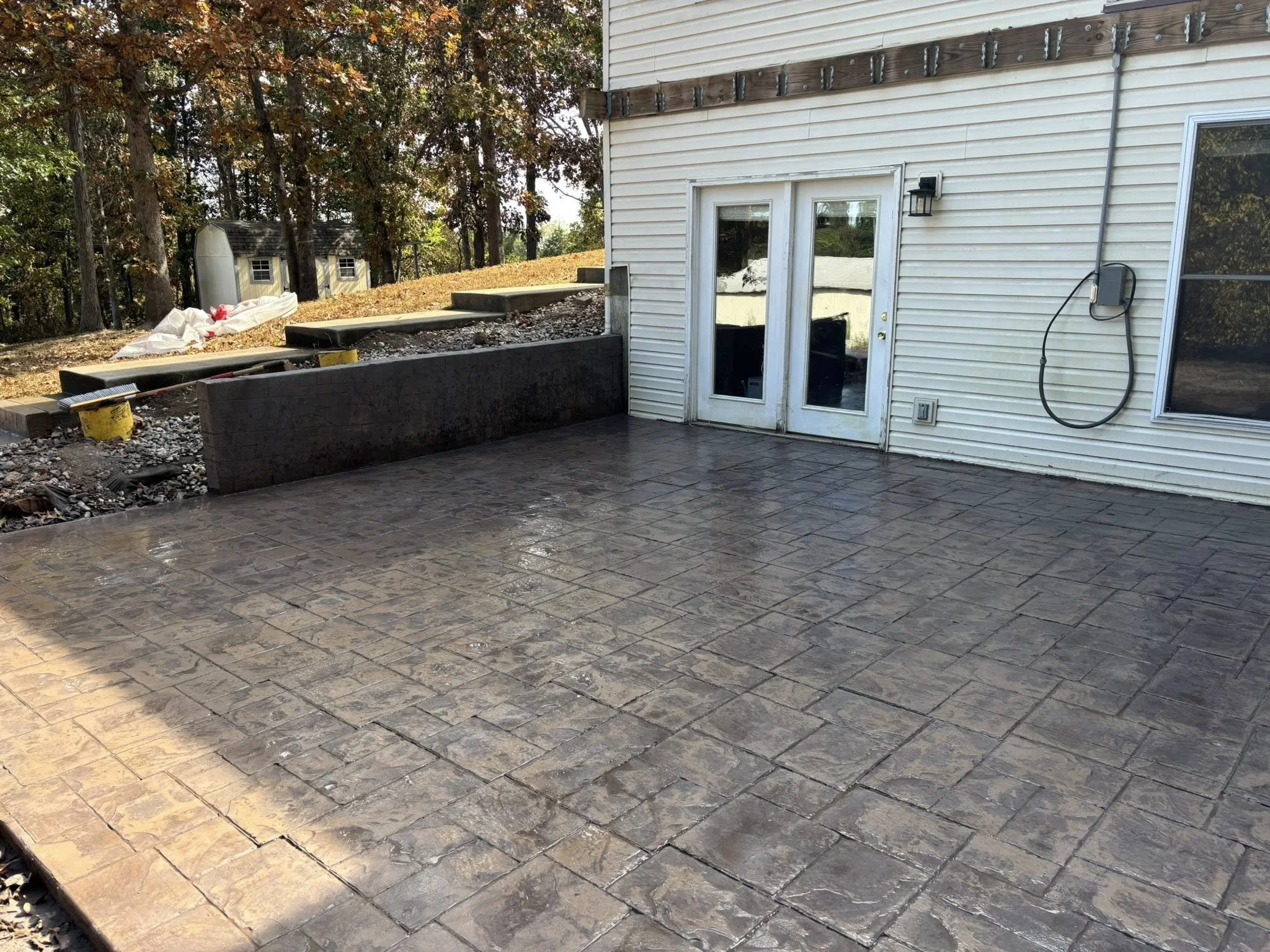
Is Stamped Concrete Worth Repairing?
Stamped concrete requires special consideration because its appearance depends on the combination of texture, pattern, and color.
Minor damage may be repairable, but matching the original finish can be challenging. Even a well-executed repair may remain visible if the surrounding concrete has faded or weathered over time.
When stamped concrete experiences extensive cracking, settlement, or deterioration, replacement may provide a more consistent appearance.
Homeowners considering stamped concrete patio replacement can also explore updated patterns and colors that complement their home's architecture. From natural stone-inspired textures to brick and slate patterns, decorative concrete offers numerous design possibilities without relying on individual paving stones.
How Salt on Concrete Can Influence Your Decision
St. Louis winters can be particularly demanding on residential concrete. Repeated freeze-thaw cycles, combined with exposure to deicing salts, can contribute to surface deterioration.
Using salt on concrete can increase the risk of scaling, a condition in which the outer surface begins to flake or peel away. Over time, repeated exposure may leave driveways, patios, and sidewalks with rough, uneven surfaces.
Minor salt damage may be addressed through appropriate surface repairs or resurfacing if the underlying concrete remains sound. More extensive deterioration may require concrete replacement.
Homeowners should also recognize that salt exposure isn't limited to the products they apply themselves. Vehicles can carry road salt onto driveways and into garages throughout the winter.
Understanding how salt damages concrete driveways can help homeowners protect both existing and newly installed surfaces.
Why the Underlying Cause of Concrete Damage Matters
One of the most common mistakes homeowners make is focusing entirely on visible damage rather than understanding why it occurred.
Poor drainage, soil movement, inadequate base preparation, tree roots, and repeated freeze-thaw cycles can all contribute to concrete deterioration.
For example, if water consistently collects beneath a concrete driveway and erodes its supporting material, patching the visible cracks may not prevent additional settlement.
An experienced St. Louis concrete contractor can evaluate the surrounding site conditions and identify whether the damage is primarily cosmetic or related to a more significant underlying problem.
Addressing the source of deterioration is an important part of choosing a solution that provides lasting value.
Is Concrete Repair Cheaper Than Replacement?
Concrete repair generally has a lower upfront cost than complete replacement. However, the initial expense isn't the only factor homeowners should consider.
Repeated repairs can become costly, particularly when the concrete continues to deteriorate or the underlying cause remains unresolved. Homeowners should consider the expected remaining life of the existing surface, the likelihood of future repairs, and whether the concrete still meets their needs.
While concrete replacement requires a larger initial investment, it may provide better long-term value when an existing surface has reached an advanced stage of deterioration.
When to Contact a St. Louis Concrete Contractor
It isn't always easy to distinguish cosmetic concrete damage from a more significant problem. An evaluation from a concrete professional can help homeowners determine whether their existing surface is worth preserving.
Consider scheduling a professional assessment if cracks continue to widen, sections of concrete have become noticeably uneven, previous repairs are failing, or water consistently collects around your driveway or patio.
A qualified residential concrete contractor can evaluate the extent of the damage, identify potential contributing factors, and help you determine the most appropriate course of action.
Find the Right Concrete Solution for Your St. Louis Home
Choosing between concrete repair and replacement comes down to more than the appearance of your existing surface. Its overall condition, underlying support, drainage, and long-term functionality should all influence your decision.
At B&K Concrete, we provide professional residential concrete services throughout St. Louis and the Metro East, including concrete driveways, patios, walkways, retaining walls, stamped concrete, and more.
Whether you're replacing a deteriorating driveway, upgrading your backyard patio, or addressing ongoing drainage concerns, our team can help you plan a concrete project that meets your property's needs.
Contact B&K Concrete today to discuss your residential concrete project and request an estimate.