How Long Does a Concrete Patio or Driveway Last?
When homeowners invest in a new driveway or patio, one of the first questions they ask is, "How long does concrete last?" The answer depends on several factors, but when installed correctly and properly maintained, concrete is one of the longest-lasting materials available for residential outdoor surfaces.
For homeowners in St. Louis and the surrounding Metro East communities, a concrete driveway or patio can often provide decades of reliable performance. Whether you're considering a traditional concrete patio, a stamped concrete patio, or a decorative driveway, understanding what impacts longevity can help you protect your investment and avoid premature repairs.
The Average Lifespan of Concrete
A professionally installed concrete driveway typically lasts between 25 and 40 years, while a concrete patio can often last 30 years or more. In many cases, concrete surfaces continue performing well beyond these timeframes when they receive proper maintenance and were built on a strong foundation.
The lifespan of concrete isn't determined solely by the material itself. The quality of installation, site preparation, drainage, and ongoing maintenance all play significant roles in how long a surface remains attractive and structurally sound.
Why Some Concrete Lasts Longer Than Others
Not all concrete projects are created equal. One of the biggest factors affecting longevity is what happens before the concrete is ever poured.
Proper excavation, grading, and base preparation create the stable foundation needed to support the slab for years to come. If the soil beneath the concrete settles, shifts, or retains excessive moisture, cracking and uneven surfaces can develop regardless of the quality of the concrete itself.
An experienced St. Louis concrete contractor understands local soil conditions and drainage challenges. Proper site preparation helps prevent many of the issues that commonly shorten the lifespan of driveways, patios, and other flatwork throughout the region.
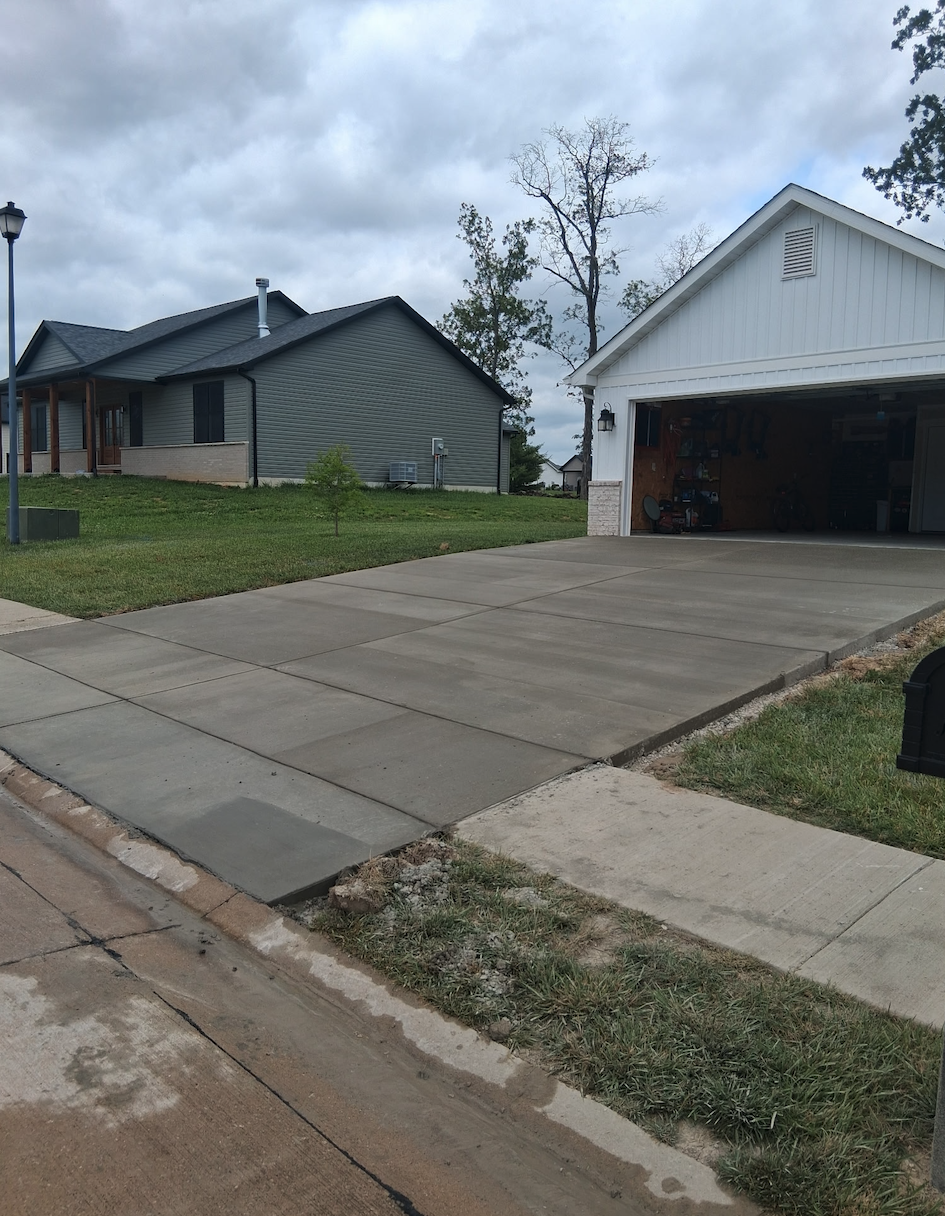
How St. Louis Weather Affects Concrete
The climate in the St. Louis area can be particularly demanding on concrete surfaces. Winter freeze-thaw cycles are one of the leading causes of concrete deterioration. Water enters small pores or cracks in the concrete, freezes when temperatures drop, and expands. Over time, this repeated cycle can cause cracking, scaling, and surface damage.
Summer heat and seasonal rainfall also contribute to wear and tear. Excessive moisture, poor drainage, and temperature fluctuations can all impact the condition of a driveway or patio over the years.
Fortunately, concrete that is properly installed and maintained is designed to withstand these environmental challenges.
Does Decorative Concrete Last as Long?
Many homeowners wonder whether decorative options such as stamped concrete are as durable as traditional concrete. The good news is that they are.
A stamped concrete patio or stamped concrete driveway is built on the same structural concrete foundation as standard flatwork. The difference lies in the finishing techniques used to create decorative patterns, textures, and colors.
When properly installed and sealed, decorative concrete can last just as long as traditional concrete while offering a more customized appearance. In fact, many homeowners choose stamped concrete because it provides the look of natural stone, brick, or pavers without sacrificing durability.
How to Extend the Life of Your Concrete
While concrete is naturally durable, a few simple maintenance practices can help maximize its lifespan.
Keeping concrete sealed is one of the most effective ways to protect it from moisture intrusion, stains, and freeze-thaw damage. This is especially important for stamped concrete patios and other decorative concrete surfaces where preserving the finish is a priority.
It's also important to address small cracks before they become larger problems. Even minor cracks can allow water to penetrate the slab, leading to additional damage over time.
Proper drainage around the driveway or patio is equally important. Water should flow away from the concrete rather than pooling on the surface or along the edges. Good drainage helps reduce settlement, erosion, and winter-related damage.
Signs Your Concrete May Need Attention
Even the best concrete will eventually show signs of age. Homeowners should keep an eye out for widening cracks, significant settlement, surface flaking, or areas where water consistently pools after rain.
These issues do not always mean replacement is necessary. In many cases, repairs can extend the life of existing concrete and prevent more extensive damage. A qualified concrete professional can evaluate the condition of the slab and recommend the most cost-effective solution.
Is Concrete Worth the Investment?
For most homeowners, the answer is yes. Concrete remains one of the most durable and cost-effective materials available for patios, driveways, walkways, and other residential flatwork.
Whether you choose a traditional concrete patio, a decorative stamped concrete patio, or a stamped concrete driveway, quality installation and routine maintenance can provide decades of performance, curb appeal, and value.
Final Thoughts
So, how long does concrete last? In most residential applications, a professionally installed concrete driveway or patio can last 25 to 40 years or more. The key is working with an experienced contractor who understands proper site preparation, drainage, and installation techniques.
For homeowners considering new flatwork in St. Louis, investing in quality workmanship today can help ensure your concrete continues performing and looking great for decades to come.
Ready to Invest in Long-Lasting Concrete?
Ready to install a new concrete patio, stamped concrete driveway, or other decorative concrete project? Contact a trusted St. Louis concrete contractor to discuss your goals and build a surface designed to last.