Concrete Grading Solutions for Commercial Properties
A commercial concrete project has to do more than provide a durable surface. It also has to move water in the right direction. Poor grading can leave parking lots, loading areas, sidewalks, and entrances with standing water that interferes with daily operations and contributes to long-term deterioration.
For property owners and facility managers in St. Louis, professional concrete grading services can help correct drainage problems and prevent them during new construction. Whether you're replacing an existing parking lot or planning new commercial concrete services, grading should be considered from the beginning of the project.
What Is Concrete Grading?
Concrete grading refers to establishing the elevations and slopes needed to direct water across and away from a concrete surface.
Concrete may appear nearly level, but most exterior surfaces require carefully planned slopes. A concrete contractor must consider where water originates, how it will travel across the property, and where it can safely drain without creating another problem elsewhere.
For commercial properties, that planning may involve coordinating the concrete with curbs, gutters, drains, sidewalks, loading areas, building entrances, and surrounding pavement.
Why Proper Grading Matters for Commercial Concrete
Large commercial properties can collect a substantial amount of rainwater. A parking lot, for example, creates a broad impervious surface that prevents water from soaking naturally into the ground.
Without adequate grading, that water can collect in low spots or travel toward buildings and pedestrian areas.
Standing water isn't simply inconvenient. Over time, it can contribute to deterioration, increase exposure to freeze-thaw cycles, and affect the soil or base supporting the concrete. During winter, pooled water can also freeze and create problems for customers, employees, and tenants.
Professional concrete grading services for commercial properties are designed to manage these conditions before they become recurring maintenance issues.
Common Signs of Poor Concrete Grading
One of the easiest signs to identify is water that remains on a concrete surface well after surrounding areas have dried. Recurring puddles in the same locations can indicate low spots or inadequate slope.
Commercial property managers may also notice water flowing toward entrances, erosion along concrete edges, settlement, cracking, or drainage systems that become overwhelmed during heavy rain.
Some problems develop gradually as the base beneath older concrete settles. Others can be traced to how the property was originally designed or constructed.
When these issues become persistent, an experienced commercial concrete contractor in St. Louis can evaluate whether repairs, regrading, or concrete replacement are appropriate.
Concrete Grading for Commercial Parking Lots
Parking lots present some of the most complex grading challenges on commercial properties. They need to accommodate vehicles and pedestrians while directing water toward designated drainage areas.
When replacing or installing a concrete parking lot, elevations should be planned around existing buildings, entrances, sidewalks, curbs, storm drains, and neighboring surfaces. Even relatively small changes in elevation can influence where water collects.
A properly graded concrete parking lot helps move runoff efficiently instead of allowing it to sit in parking spaces, drive lanes, or near building foundations.
Loading Areas and Heavy-Traffic Concrete
Loading docks, dumpster pads, delivery areas, and service lanes place additional demands on concrete.
These areas regularly support heavier vehicles while also needing to manage runoff. If water collects beneath or around heavily loaded slabs, erosion and base instability can contribute to settlement and cracking.
Commercial concrete grading should therefore account for both drainage and how the surface will be used. A qualified concrete contractor for commercial properties can plan the site around expected traffic patterns and load requirements rather than treating every slab the same.
Grading Around Commercial Entrances and Sidewalks
Drainage planning is equally important around pedestrian areas.
Concrete sidewalks and entrances need to connect smoothly with surrounding surfaces while directing water away from doorways and other areas where it can create problems. Accessibility requirements may also limit how slopes and transitions can be designed.
This makes precision especially important. A commercial concrete professional must balance drainage requirements with accessibility, pedestrian movement, existing elevations, and the overall site design.
How St. Louis Weather Affects Concrete Grading
The St. Louis climate makes effective drainage particularly important. Heavy rainfall can put drainage systems to the test, while winter temperatures introduce repeated freeze-thaw cycles.
When water remains on or around concrete and temperatures fall below freezing, the moisture can freeze and expand. Existing cracks and deteriorated surfaces may worsen as the process repeats.
A St. Louis concrete contractor familiar with regional conditions can account for these challenges when planning grading, site preparation, and concrete installation.
Can Existing Concrete Be Regraded?
Not in the same way that soil or an aggregate base can be regraded. Once concrete has cured, its slope is largely fixed.
Some localized drainage problems may have repair options depending on the cause and condition of the slab. However, concrete that was installed at an incorrect elevation or has experienced significant settlement may need sectional or complete replacement to establish the proper grade.
This is one reason drainage planning is so important before a new pour. Correcting the slope during site preparation is typically far more straightforward than addressing a major grading problem after the concrete has been installed.
Grading Starts Before the Concrete Pour
Successful commercial concrete grading solutions begin with site preparation.
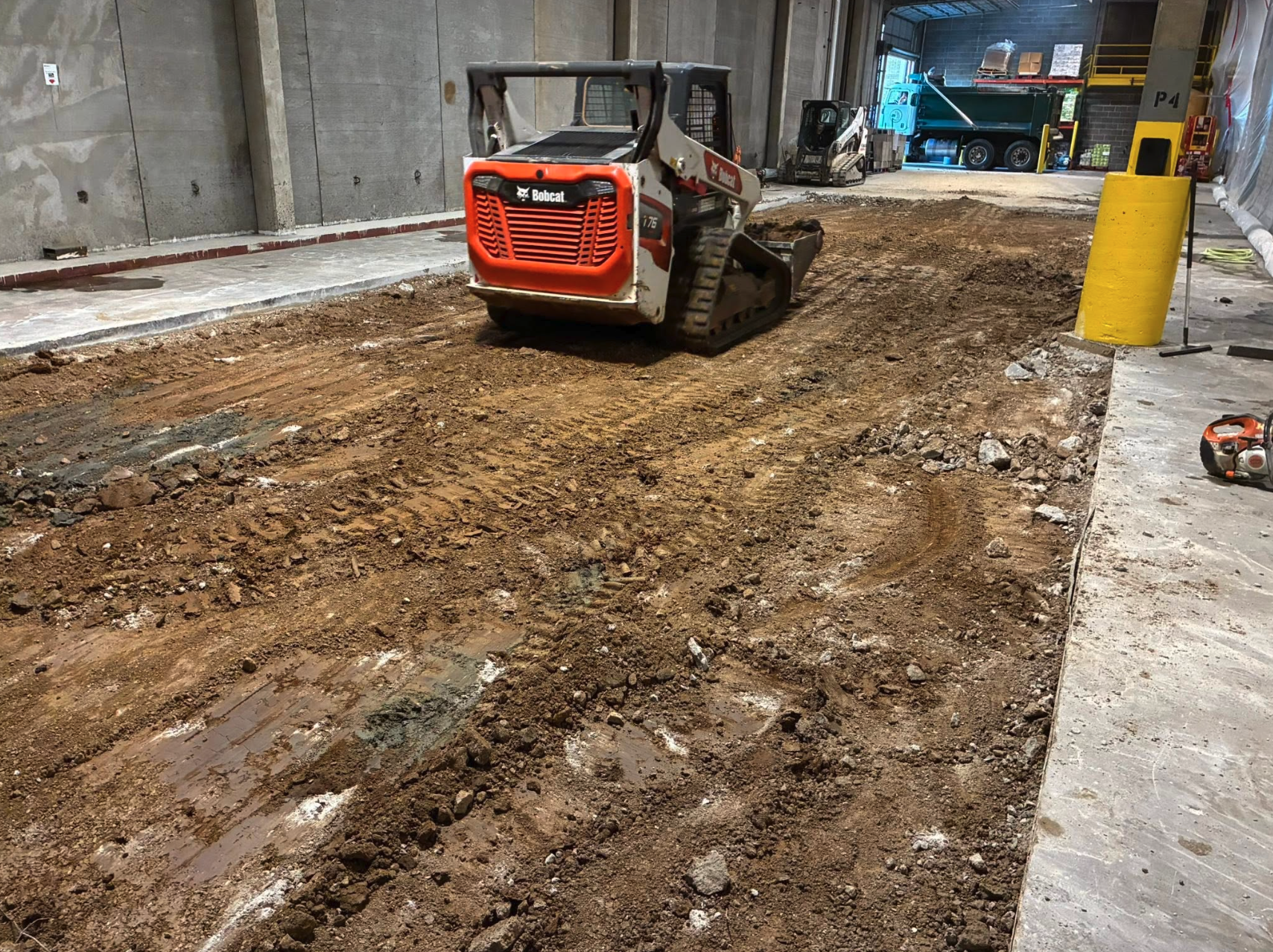
Before installation, contractors evaluate existing elevations and drainage patterns, excavate unsuitable materials, establish the necessary grade, and prepare a stable base. The finished concrete can then follow the planned elevations and direct runoff toward the appropriate drainage system.
For larger commercial projects, this process may require coordination with engineers, general contractors, utility crews, or other trades working on the property.
The finished concrete is only one part of the system. What happens underneath and around it has a significant impact on long-term performance.
Choosing Commercial Concrete Services in St. Louis
When evaluating commercial concrete services in St. Louis, property owners should look beyond the finished appearance of the concrete. Contractors should understand excavation, site preparation, grading, drainage, and concrete installation as interconnected parts of the project.
That becomes particularly important for parking lots, loading areas, sidewalks, commercial entrances, and other large surfaces where correcting a drainage problem later can be disruptive and expensive.
Plan Commercial Concrete Around the Entire Property
Effective grading isn't about simply putting a slope on a slab. It requires understanding how the entire property handles water.
For commercial property owners in St. Louis, professional concrete grading services can help prevent standing water, protect surrounding infrastructure, and support the long-term performance of new concrete. Working with an experienced commercial concrete contractor from the beginning allows drainage, site preparation, and concrete installation to be planned as one complete system rather than separate problems to solve later.