Preparing Commercial Concrete Properties for Spring Repairs
Winter conditions in St. Louis can leave commercial properties with hidden structural issues, surface deterioration, and safety hazards. As temperatures rise, spring becomes the ideal time to assess damage and plan for commercial concrete repair before minor issues turn into major liabilities.
For business owners and commercial landlords, proactive spring planning protects both property value and operational continuity.
Why Spring Is Critical for Commercial Concrete Repair
Freeze-thaw cycles, deicing chemicals, and snow removal equipment take a toll on commercial concrete surfaces throughout winter. By early spring, damage often becomes visible in:
Sidewalks and walkways
Loading docks
Entry aprons
Dumpster pads and service areas
Addressing these issues early helps prevent further deterioration during heavy summer traffic and rainfall.
Common Winter Damage Found in Commercial Properties
Crack Expansion
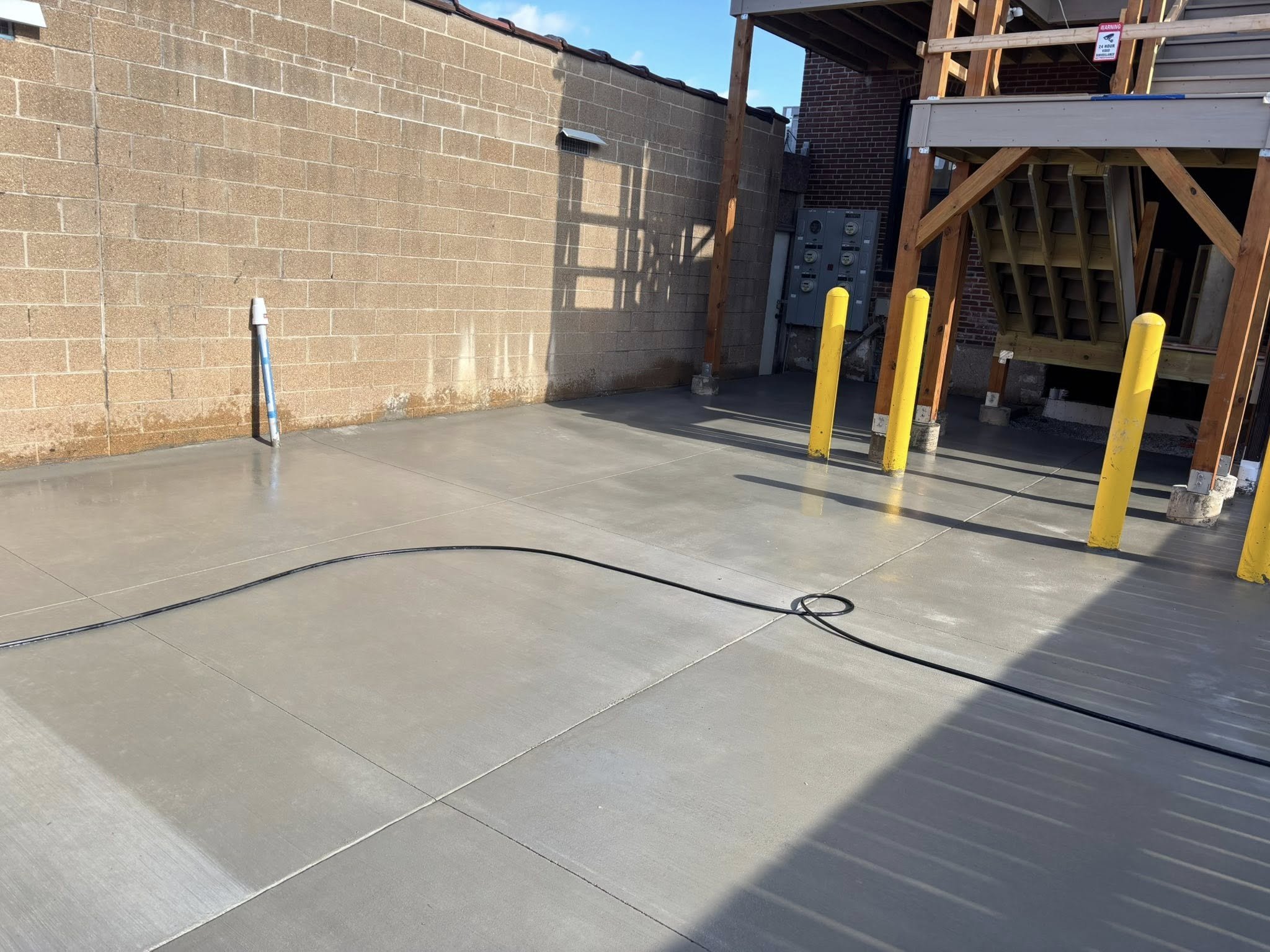
Commercial Loading Dock in Affton, MO
Small cracks formed during winter can widen as moisture continues to penetrate the slab. Left untreated, these cracks compromise structural integrity and accelerate surface failure.
Surface Scaling and Spalling
Salt exposure frequently leads to flaking or peeling at the surface. This is not just cosmetic—scaling weakens the slab and increases slip hazards.
Joint Failure
Expansion joints are especially vulnerable. Damaged joints allow water intrusion, leading to slab shifting and uneven surfaces.
Drainage Problems
Winter runoff can reveal grading or pooling issues that require correction before additional damage occurs.
Spring Inspection Checklist for Property Managers
A thorough inspection should include:
Reviewing all concrete surfaces for new or expanding cracks
Identifying trip hazards or uneven slabs
Checking for water pooling after rain
Evaluating surface wear in high-traffic areas
Inspecting loading zones for heavy vehicle stress
Early detection supports cost-effective commercial concrete repair instead of full replacement.
Prioritizing Repairs Strategically
Not all damage requires immediate reconstruction. A strategic repair plan can include:
Crack sealing to prevent water intrusion
Joint restoration to maintain slab stability
Surface patching or partial slab replacement
Resurfacing to restore appearance and safety
Phased repairs minimize disruption to tenants and customers while protecting your long-term investment.
Why St. Louis Commercial Properties Require Special Attention
The St. Louis climate is characterized by:
Frequent freeze-thaw cycles
High humidity
Significant seasonal rainfall
These environmental factors accelerate deterioration in commercial concrete surfaces. Without timely maintenance, damage compounds rapidly.
Budgeting for Spring Concrete Repairs
Spring is also the ideal time to align repairs with annual maintenance budgets. Planning ahead allows for:
Competitive scheduling
Accurate cost projections
Avoidance of emergency repairs during peak business months
Delaying necessary commercial concrete repair often increases overall project costs.
When Replacement Is the Better Option
In some cases, repeated patchwork is no longer cost-effective. Full or sectional replacement may be recommended when:
Cracks are widespread and structural
Slabs have shifted significantly
Surface deterioration is extensive
Drainage problems require regrading
A professional evaluation determines the most financially responsible solution.
Final Thoughts
Spring provides a critical window for assessing and addressing winter damage in St. Louis commercial properties. Proactive commercial concrete repair improves safety, reduces liability, and protects your property’s long-term value.
Waiting until problems worsen often results in higher costs and operational disruption.